
✦ DIFFICULTY Moderate

Benefits from more deliberate care.

☀ LIGHT High

Around 10 hours is a useful starting point.

≈ CO₂ Recommended

Can grow without it, but responds noticeably to supplementation.

↗ GROWTH Medium

Low trimming needs.

PLANT OVERVIEW

About Orchid Lily

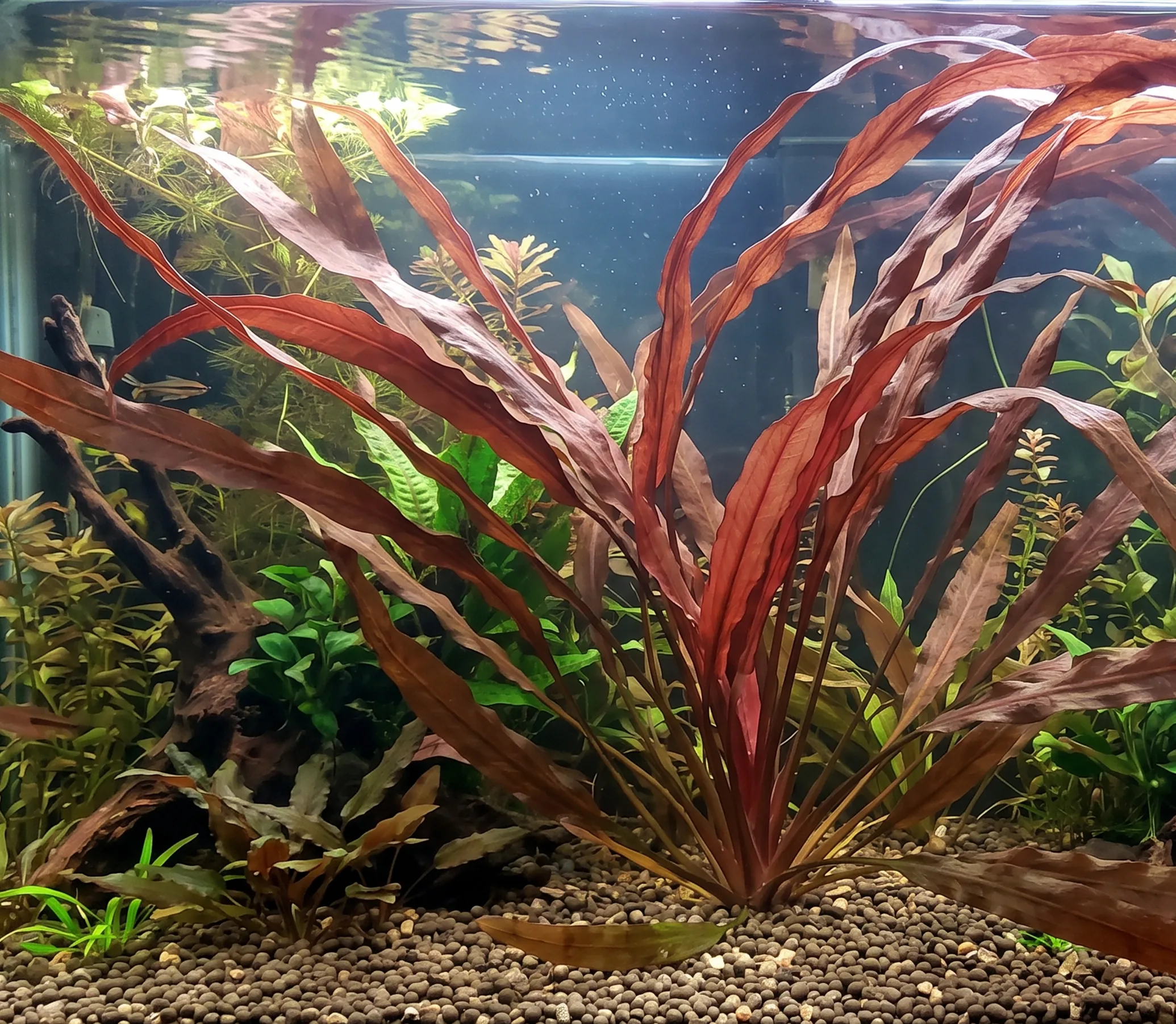
A tuberous lily with wavy red-green leaves and a striking form.

Barclaya Longifolia is the moody, wine-colored beauty of the aquatic plant world, unfurling long wavy leaves in deep red-bronze on top with a lighter maroon underside that catches light beautifully under the right conditions. It grows from a bulb-like rhizome and prefers softer, slightly acidic water with consistent conditions, making it a bit pickier than your average background filler, sudden changes tend to stall growth or trigger melt. Once settled in, though, it rewards patience with striking centerpiece foliage that sways with real presence in the water column. Best paired with stable dosing and mature substrate rather than a freshly set up tank.
Shrimp friendly High-tech suitable
CARE PROFILE

What this plant needs.

The useful numbers and practical notes, grouped around how you actually keep the plant.

□
TANK FIT

Placement + size

Primary placementMidground
Typical height6–16 in
Typical width10 in
Suggested minimum tank20 gal
Suggested tank height14 in+
☀
LIGHT + CO₂

Energy demand

Ideal lightHigh
Photoperiod range8–12 hr
Approx. PAR40–100
Injected CO₂Recommended
CO₂ benefitHigh
●
NUTRITION

Where it feeds

Root feedingVery High
Water-column feedingLow
Overall fertilizer demandHigh
Iron demandHigh
MicronutrientsHigh
≈
WATER

Useful parameter range

Temperature72–82°F
pH6–7
GH2–12 dGH
KH1–8 dKH
PLANTING

How to plant it.

Substrate: Nutrient-rich substrate; heavy root feeder

Grows from a tuber/bulb; keep the crown exposed and feed the roots heavily.

GROWTH + PROPAGATION

What to expect after planting.

Propagation

Adventitious plantlets / runners

Acclimation

May go dormant and die back, then resprout from the tuber; leave the bulb in place.

COMMON PROBLEMS

What usually goes wrong.

Nutrient-hungry; pale or holey leaves signal a lack of root feeding or potassium.